Twenty-something John, whose life has run up a cul-de-sac, inherits a
distant relative’s estate, requiring him to move to the remote Scottish
Borders. There he, and his university friend Billy, discover and
inadvertently re-activate an alien weapon. As they learn to use it, the
pair are inexorably drawn to its dark heart. At first it is adventurous fun,
enabling them to help friends. However, its immense capability sends
events spiralling out of control and John and Billy quickly become
victims of their own absolute power. They drag their friend, Wendy,
into this maelstrom.
Billy is recruited by ruthless Latvian gangsters to hack financial
systems. When the gangsters demand their pound of flesh, the friends
decide to take them on, believing the device will help them. To get the
upper hand they steal data from the Government’s Central Head
Quarters (GCHQ).
However, they find themselves embroiled in human trafficking, an
international terror plot, as well as attacks on both GCHQ and the
terrorists. GCHQ despatches Special Forces soldiers to stop them.
Meanwhile, a battle-scarred alien commander, Zuri, and her soldiers
have been dispatched to Earth to retrieve the weapon. Normally
stored by their peaceful society until needed, these tough female
warriors will let nothing stand in the way of their mission. At the same
time, beyond the visible universe, a despotic and ruthless empire,
embroiled in power struggles, waits for the weapon to be used again.
It will open a tear in space-time, through which their merciless
conquering armies can pour.
As Zuri and the Special Forces close in, the two universes finally
collide. In what little time is left, John, Billy, Wendy and the Special
Forces must unite with Zuri to defeat the invasion from the alternate
universe. The only other option involves a cataclysmic, planet
destroying explosion.
© jdamfPUBLISH a wholly owned subsidiary of Snoozing Dogs Productions©
jdamfpublish@jdamf.co.uk
Made with Xara

Background
‘My complete answer to the late 19th century question ‘what is electrodynamics
trying to tell us?’ would simply be this: ‘Fields in empty space have physical reality; the
medium that supports them does not.’
Having thus removed the mystery from electrodynamics, let me immediately do the
same for quantum mechanics: ‘Correlations have physical reality; that which they
correlate does not.’
The first proposition probably sounded as bizarre to most late 19th century physicists
as the second sounds to us today; I expect that the second will sound as boringly
obvious to late 21st century physicists as the first sounds to us today.
And that is all there is to it. The rest is commentary.’
Mermin D. What Is Quantum Mechanics Trying to Tell Us? Notes for a
lecture given at the Symposium in Honor of Edward M. Purcell, Harvard University,
October 18, 1997. Am. J. Phys. 1998; 66: 753-767.
Quantum Physics
Quantum physics - the world of the very small (or more strictly, the
world of the very isolated) encompasses some bizarre theories – do not worry if
they seem bonkers; they really are.
Quantum theory is strange to all but the wisest of people, counter
intuitive and impossibly difficult to explain in simple language. The ‘theory’
consists of a collection of ideas developed over the twentieth century. Some of
its components are still not well understood and some of the bizarre behaviour
it predicts flies in the face of ‘common sense’.
Paul Dirac who was a Lucasian Professor of Mathematics at Cambridge
University England (a predecessor of Steven Hawking) said: ‘there is hope that
quantum mechanics will gradually lose its baffling quality... I have observed in
teaching quantum mechanics, and also in learning it, that students go through an
experience... The student begins by learning the tricks of the trade. He learns how to
make calculations in quantum mechanics and get the right answers... it is
comparatively painless. The second stage comes when the student begins to worry
because he does not understand what he has been doing. He worries because he has
no clear physical picture in his head... Then, unexpectedly, the third stage begins. The
student suddenly says to himself, I understand quantum mechanics, or rather he says,
I understand now that there isn’t anything to be understood...’
The atom is the building block of everything. How does it work? How do
the electrons move inside it? Scientists at the beginning of the 20
th
century had
been pondering such questions for more than a decade, without getting
anywhere. A Danish Physicist Niels Bohr had developed a series of equations
that would in part predict electron behaviour in jumping from one orbit to
another and back, releasing light in the process (predicting the orange colour
seen when heating sodium in a flame for example). However, there seemed to
be no reasonable force capable of guiding the electrons on Bohr’s strange
orbits, and in his orbital leaps.
Staying alone on Heligoland, an island in the North Sea, to escape
seasonal pollen allergy, Werner Heisenberg resolved to explore radical ideas as
an explanation. His ‘radical idea’ was to stop trying to find a new force or a new
law of motion as explanations and base everything on quantities that are
observable, considering the electron itself. He simply replaced the numbers in
Bohr’s equations for orbits with tables or matrices of numbers accounting for
every possible electron orbit.
At the time Heisenberg said ‘At first, I was deeply alarmed. I had the feeling
that I had gone beyond the surface of things and was beginning to see a strangely
beautiful interior and felt dizzy at the thought that now I had to investigate this
wealth of mathematical structures that Nature had so generously spread out before
me’.
The energy values calculated using the matrices of Heisenberg were
precisely those hypothesised by Bohr and in effect, quantum physics was born.
Ultimately it leads to two principles of quantum theory: firstly,
information is finite and secondly, even when we have gathered maximum
information about an object, it is still possible to learn something unexpected
about it. The future is not determined by the past: the world is probabilistic.
This general property of reality is called Heisenberg’s uncertainty
principle. He showed that if the precision with which we have information on
the position of something is ΔX, and the precision with which we have
information on its speed (multiplied by its mass) is ΔP, the two precisions cannot
both be arbitrarily good. They cannot both be too close to zero. Their product
cannot be smaller than a minimum quantity (half the Planck constant). It
applies to everything.
An immediate consequence is granularity. Light, for instance, is made of
photons or quanta of light, because portions of energy that were even more
minute than this would violate the the first postulate.
Teleportation
Broadly speaking, Newton’s Law of Universal Gravitation is a perfectly
good description of our everyday experiences; yet it is wrong. Much of physics
is now explained in terms of General Relativity – the world of the very large and
Quantum theory, yet we have not quite worked out how to bring the latter two
worlds together – but we are getting close (although those who offer any such
explanations are often considered crazy by their contemporaries). Our current
gaps in understanding are expressed through terms such as ‘dark energy’ or
‘dark matter’. Do not be fooled by anyone who talks knowledgably about either
of these; they are claiming expertise in ignorance!
Einstein’s theory of General Relativity describes how matter distorts
space-time and how distorted space-time, in turn, affects matter. Objects, like
the Earth, fly freely under their own inertia through warped space-time
following a curved path because it is the shortest route in that warped space-
time.
One of the interesting possibilities raised by quantum theory is
‘teleportation’. I know that is something much beloved by TV and films – all of
which you might rightly suspect is nonsense. Except quantum theory is weird
enough to accommodate it. Just not in the manner it is usually portrayed.
Quantum teleportation is a technique for transferring quantum information
from a sender at one location to a receiver some distance away. However,
Quantum teleportation only transfers quantum information.
Put all that aside for the moment. Let us suppose you had the ability to
‘teleport’ objects and people. With that, you would have intoxicating, addictive
and absolute power. Imagine how it would make you behave? Well, I can tell
you, not like it is currently portrayed in popular science fiction.
As John Emerich Edward Dalberg-Acton, 1st Baron Acton, wrote to
Mandell Creighton, Archbishop of the Church of England on April 5
th
, 1887,
‘Power tends to corrupt and absolute power corrupts absolutely. Great men are
almost always bad men, even when they exercise influence and not authority: still
more when you superadd the tendency or the certainty of corruption by authority.
There is no worse heresy than that the office sanctifies the holder of it. That is the
point at which . . . the end learns to justify the means.’
Imagine if you were not even a great man in the first place.
The Speed of Light
After detailed study of the motion of Jupiter’s moon Io, Ole Rømer
concluded in 1676 that light travelled at a finite speed.
In 1865, James Clerk Maxwell, building on the earlier work of Ampère,
Coulomb and Faraday, proposed that light was an electromagnetic wave
travelling at the speed (c) relative to some unconfirmed medium he called
‘aether’.
Michelson-Morley’s experiments of 1887 failed to find this “aether” but
unexpectedly demonstrated that light travelled at the same speed regardless of
whether it was measured in the direction of the Earth’s motion or at right
angles to it, completely contrary to classical physics and common sense at the
time.
In 1905, Einstein realised that Maxwell’s equations led to an apparent
paradox in the laws of physics. They suggested that by catching up to a beam of
light, a stationary electromagnetic wave could be seen – an impossibility. He
also realised that the whole idea of aether as a medium for light to travel in was
totally unnecessary.
According to Einstein’s theory of special relativity, the speed of light (c)
was the maximum speed at which all matter (and thus information) in the
universe could travel. For many practical purposes, light (and other
electromagnetic waves) appeared to propagate instantaneously but, over very
long distances, its finite speed has a noticeable effect. For example, light from
the stars left them many years previously.
The speed of light is used to measure large distances to a high precision.
As defined by the International Astronomical Union (IAU), a light-year is the
distance light travelled in a vacuum in one Julian year (365.25 days). The term
light-year is sometimes misinterpreted as a unit of time, but it is, of course, a
unit of length – approximately nine trillion kilometres (or about six trillion
miles). If you could travel at 30 million miles an hour, it would take 40 years to
cover two light years.
Since light started travelling at the big bang, just under 14 billion years
ago, we cannot see any further than about 14 billion light-years (remember a
light-year is a measure of distance not time). The amount of space encompassed
by this journey of light is called the Hubble Volume and represents our
observable universe. The observable universe includes 10 million superclusters,
25 billion galaxy groups, 350 billion large galaxies, 7 trillion dwarf galaxies and
30 billion trillion stars.
So, how can the universe be 93 billion light-years wide if it is only 14
billion years old and nothing can travel faster than light?
Observations of galactic redshift (the change in light’s wavelength
when its source is moving away) reveal those objects three times more distant
are moving three times faster relative to nearby galaxies. The farther we
investigate space, the faster the galaxies are moving. They are moving so fast at
these vast distances that they easily surpass the speed of light. While the
theory of relativity states that objects cannot travel faster than the speed of
light, it does not place any limits on space-time itself. Consequently, the galaxies
(and any other objects in space) are not defying the ‘laws’ of physics by
travelling through space faster than light. Instead, every portion of space-time
is expanding. It is not even that the edges of space are flying outward but that
space-time itself – the area between galaxies, stars, planets – is stretching.
When the universe first came into existence approximately 14 billion
years ago, space-time itself began expanding at speeds faster than the speed of
light. This period, called inflation, is integral to explaining much more than the
universe’s size. It also covers things like the homogeneous nature of space on a
large scale and the conditions that existed during the first epoch.
The universe transitioned from an infinitely dense and hot state into a
vast area teeming with protons and neutrons – particles that eventually came
together and forged the building blocks of all matter – within moments. After
the initial inflation died down, the expansion slowed. Now, objects are being
pulled apart by a process we do not understand and, in our ignorance, call dark
energy.
Black Holes, Wormholes and White Holes
Neither wormholes nor black holes have yet been seen directly,
although both follow inevitably from the General Theory of Relativity. There is
indirect evidence, at least for black holes, including a recent photograph of the
accretion disk around one.
If the mass of the compressed remnant of a supernova exceeds about 3
to 4 solar masses, the core collapses completely into a gravitational singularity,
a single point containing all the mass of the original star. The gravity in such a
phenomenon is so strong that it overwhelms all other forces, to the extent that
even light cannot escape from it, hence the name black hole.
Although the singularity at the centre of a black hole is infinitely dense,
the black hole itself is not necessarily huge and exerts no more gravitational pull
on the objects around it than the original star from which it was formed. Any
objects orbiting the original star that survived the supernova explosion
continue to orbit the black hole. The black hole can grow by assimilating
material, but that material must approach quite close to the black hole before
being drawn in.
The simplest type of black hole, in which the core does not rotate and
just has a singularity and an event horizon, is known as a Schwarzschild black
hole after the German physicist, Karl Schwarzschild. He pioneered much of the
very early theory with Albert Einstein. In the late fifties, David Finkelstein
published a paper, based on Einstein and Schwarzschild’s work, describing the
idea of a “one-way membrane” which triggered a renewed interest in black hole
theory. In the mid-sixties, Roger Penrose demonstrated that a gravitational
collapse of a large dying star must result in a singularity where space-time
cannot exist, and classical general relativity breaks down. In the late sixties,
Penrose and Stephen Hawking applied a new mathematical model derived from
Einstein's theory of General Relativity. This led to Hawking's proof of the first of
several singularity theorems. Such theorems provided a set of conditions for
the existence of a gravitational singularity in space-time and showed that, far
from being mathematical curiosities, they were a common feature of general
relativity.
Space-time locality is one of the cornerstones of our present
understanding of physics. ‘Locality’ implies the impossibility of sending signals
faster than the speed of light. However, our understanding of locality is
challenged both by quantum mechanics and general relativity.
Quantum mechanics gives rise to Einstein-Podolsky-Rosen (EPR)
correlations (entanglement). General Relativity allows solutions to the
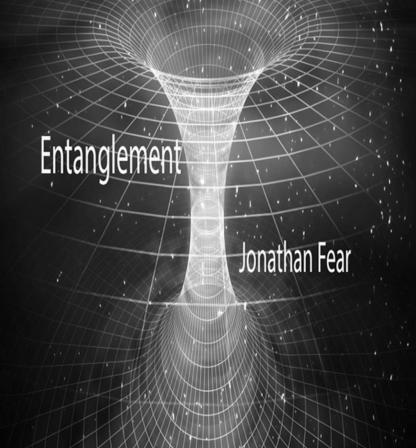
equations of motion that connect regions through relatively short “wormholes”
or Einstein-Rosen bridges. At first sight, both entanglement and Einstein-Rosen
bridges seem like strange violations of locality. However, classical quantum
physics says in both cases that they do not provide mechanisms to propagate
signals. Examination of a Penrose diagram of a two-sided black hole clearly
shows that no signal can pass through a wormhole from one exterior region to
the other.
Imagine two black holes that are entangled to produce an Einstein-
Rosen bridge. Bob is stationed at one and Alice at the other. As long as Bob and
Alice stay outside their respective black hole event horizons, communication
between them can only take place through exterior space – a long trip which
cannot be short-circuited through the Einstein-Rosen bridge. Imagine that Alice
has a quantum computer that controls her black hole. She hopes to send
messages to Bob through the Einstein-Rosen bridge. However, Bob cannot
receive the messages if he is outside the event horizon on his side although as
soon as he passes through the event horizon he can. You might imagine that
under certain conditions Bob and Alice could jump into their respective black
holes and meet very soon after. However, Einstein-Rosen bridges are not
traversable. As Bob jumps into the black hole, it shrinks as he approaches the
singularity; the bridge closes, before he can get through. At the same instant,
time evolves and the bridge stretches. Its length grows so fast that no signal can
get through.
Although it may seem a very complex, peculiar and perhaps
counterintuitive object, a black hole can essentially be described by just three
quantities: its mass, its angular momentum and its electrical charge.
In 1974, Hawking showed that black holes thermally create and emit
sub-atomic particles (now called Hawking radiation) until they exhaust their
energy and evaporate completely. According to this theory, black holes are
neither completely black nor last forever. He showed how the strong
gravitational field around a black hole can affect the production of matching
pairs of particles and anti-particles. This happens all the time in ‘empty’ space
according to quantum theory. If the particles are created just outside the event
horizon of a black hole, then it is possible that an electron may escape –
observed as thermal radiation emitting from the black hole – while its
antimatter equivalent, a positron, may fall back into the black hole. This is the
mechanism through which a black hole gradually loses mass.
It was one of the first expressions of a theory which synthesised, at
least to some extent, quantum mechanics and general relativity.
However, a corollary of this is the so-called “Information Paradox” or
“Hawking Paradox”, whereby physical information (which roughly means the
distinct identity and properties of particles going into a black hole) appears to
be completely lost to the universe in contravention of the accepted laws of
physics (referred to as the "law of conservation of information").
Hawking vigorously defended this paradox for almost 30 years. In
2004, he overturned his long-held belief that any “information” crossing the
event horizon of a black hole is lost. He became convinced that black holes
would eventually transmit, albeit in a garbled format (as we perceive it)
information about all matter they had consumed. This is a complex area of
theory and even Hawking struggled to communicate it, stating at one point,
“The Euclidean path integral over all topologically trivial metrics can be done by time
slicing and so is unitary when analytically continued to the Lorentzian”.
It is theoretically possible to use such a concept as a tunnel or short-cut
for high-speed space travel between distant points. However, a generally
accepted property of wormholes is that they are inherently highly unstable and
would probably collapse in a much shorter time than it would take to get
through to the other side. Furthermore, even if it were possible to get a photon
or other matter into the Einstein-Rosen bridge it would necessarily hit the
singularity(s). A more massive object would have to travel faster than the speed
of light to get through. Nevertheless, the prospect of a practical application of
the theory remains a possibility.
An alternative proposed solution to the accepted view is almost
impossible to envisage or explain in an understandable way. Conformal
Symmetry theory suggests that, as an object falls into a black hole, a copy of the
information that makes it up is scrambled and distributed in two dimensions
around the edge of the black hole. Furthermore, it suggests that a similar
process occurs in the universe as a whole. This implies three-dimensional
‘reality’ is merely a holographic representation of alternate reality contained in
two dimensions around the edge of the universe.
Quantum Entanglement
Quantum entanglement is a physical phenomenon that occurs when
pairs or groups of particles are generated or interact in ways such that the
quantum state of each particle cannot be described independently of the
others. In quantum mechanics, ‘spin’ is an intrinsic form of angular momentum
carried by elementary particles, composite particles (hadrons) and atomic
nuclei. One notable feature of angular momentum is that it must be preserved –
it cannot be lost.
Entanglement means that if you observe the spin state of one of a pair
of particles, you know that of the other, even when the particles are separated
by a large distance. In other words, a quantum state is determined for the whole
system. Entanglement has been demonstrated experimentally in photons,
neutrinos, electrons, molecules and even small diamonds.
Imagine two observers, Bob and Alice, who might be neighbours, or on
different continents, even on different planets, observing a pair of particles, one
with Bob and the other with Alice.
‘People have been asking how the particle with Alice somehow knew the
proper spin state to be in, because presumably, before any measurement is made,
they both can randomly select one of two spin states to be in. Was there any signal
sent from Bob's particle to Alice's to tell it what spin state to be in? We have found no
such signal, and if there is, it has been shown that it will have to travel significantly
faster than c (the speed of light). No matter how far apart the two daughter particles
are, they somehow will know just what state to be in once one of them is measured.
This, boys and girls, is what we called quantum entanglement. The property
of the quantum particles that we call ‘spin’ is entangled between these two particles.
Once the value of the spin of one particle is determined, it automatically forces the
other particles to be in a corresponding state to preserve the conservation law.
But note that what is entangled is the property of the particle. It is the
information about the property (spin) that is undergoing the so-called ‘quantum
teleportation’. The particle itself did not get ‘teleported’ the way they ‘teleport’ things
in Star Trek movies/TV series. It is the property, in other words, the information, about
the object, that is entangled, not the entire object itself. So, in this example, the object
doesn't jump around all over the place.’
ZapperZ Wednesday, April 22, 2015
http://physicsandphysicists.blogspot.co.uk/2015/04/quantum-entanglement-for-
dummies.html Accessed 2021
Quantum Vacuum Drive
The Unruh radiation is a strange phenomenon: an accelerating observer
travelling through Minkowski space-time will observe a thermal spectrum of
particle excitations. In other words, the background appears to be warm when
viewed from an accelerating frame of reference. Minkowski space-time is a
combination of three-dimensional Euclidean space and time into a four-
dimensional manifold. A manifold is a topological space that is locally Euclidean.
For example, any spherical object, Earth for instance, that is nearly flat on a
small scale is a manifold.
Unruh demonstrated theoretically that the notion of vacuum depends
on the path of the observer through space-time. However, a ‘vacuum’ is not
‘empty space’, it is filled with the quantum fields that make up the universe. A
vacuum is simply the lowest possible energy state of these fields.
This phenomenon underpins the quantum vacuum thruster where
thrust is produced by the momentum transfer of microwaves in a waveguide
chamber of the drive. The cone shaped chamber allows Unruh radiation of a
certain size at the large end but only a smaller wavelength at the other end,
exerting an impact on photons.
Nevertheless, how could such a device work? According to Einstein’s
theory of special relativity, any object with rest mass gains relativistic mass as it
increases momentum. Yet, photons never come to rest and cannot be
considered to have resting mass and, without that, its mass cannot increase like
relativistic masses (which is why light travels so quickly). This forms the basis of
our ‘laws’ of physics that agree with experiments; photons have no relativistic
mass and therefore no inertial mass.
Bizarrely, however, photons do have momentum as demonstrated by
the Compton Scattering experiments. The scattering of a photon by a charged
particle (or microwave) results in a decrease in energy (increase in wavelength)
of the photon. It is this change in momentum and the requirement to maintain
overall momentum in the system that provides the energy to power the
thruster. Even more oddly, if the shape of the chamber is reversed, the thrust
itself can be reversed.
Speeds in excess of 600,000 mph are theoretically possible from an
engine that apparently has no fuel.
The Multiverse
The multiverse is a theory in which our universe is not the only one,
rather many universes exist in parallel to each other. There is a range of
constructs to describe the multiverse from level one to four. Consider a level
one parallel universe. In such a model, space is so vast the rules of probability
inevitably dictate other planets exactly like Earth will exist (in fact an infinite
number). This construct relies on two assumptions:
The universe is infinite.
Within an infinite universe, every single possible configuration of
particles we know of in the Hubble volume takes place multiple
times.
However, if such parallel universes do exist, reaching one would be
impossible. Out with the Hubble volume, no information could ever be
exchanged as it is beyond the speed of light, the absolute limitation of
information transfer within the Hubble volume. Unless of course, you could
transcend space time.
Ship of Theseus
The ship of Theseus, also known as Theseus's paradox, is a thought
experiment that raises the question of whether an object having had its
components replaced remains fundamentally the same object. The paradox was
most notably considered by Plutarch in the late first century.
‘The ship wherein Theseus and the youth of Athens returned from Crete had
thirty oars, and was preserved by the Athenians down even to the time of Demetrius
Phalereus, for they took away the old planks as they decayed, putting in new and
stronger timber in their places, in so much that this ship became a standing example
among the philosophers, for the logical question of things that grow; one side holding
that the ship remained the same, and the other contending that it was not the same.’
Plutarch, Life of Theseus
Plutarch questioned whether the ship would remain the same if it were
entirely replaced, piece by piece.
Centuries later, the philosopher Thomas Hobbes (1588-1679)
introduced a further element to the conundrum; what would happen if the
original planks were gathered up after they were replaced and used to build a
second ship. He asked, ‘Which ship, if either, would be the original ship of
Theseus?’
The Platonic Solids
The ancient Greeks studied the Platonic solids extensively. Sources
credit Pythagoras with their discovery. Other evidence suggests that he may
have only been familiar with the tetrahedron, cube and icosahedron and that
the discovery of the octahedron and dodecahedron belong to Theaetetus, a
Greek mathematician and contemporary of Plato. Theaetetus gave a
mathematical description of all five platonic solids and may have been
responsible for the first known proof that no other convex regular polyhedra
exist.
The Platonic solids are prominent in the philosophy of Plato. He wrote about
them in the dialogue Timaeus, a long monologue given by Timaeus of Locri,
written about 360 BCE, in which he associated each of the four classical
elements (earth, air, water and fire) with a regular solid. Earth was associated
with the cube, air with the octahedron, water with the icosahedron and fire
with the tetrahedron. Of the fifth Platonic solid, the dodecahedron, Plato
obscurely remarked, ‘The gods used it for arranging the constellations on the
whole heaven.’













JdamfPUBLISH

© jdamfPUBLISH a wholly owned subsidiary of Snoozing Dogs Productions©
jdamfpublish@jdamf.co.uk
Made with Xara

Twenty-something John, whose life has run up a cul-de-sac, inherits a
distant relative’s estate, requiring him to move to the remote Scottish
Borders. There he, and his university friend Billy, discover and
inadvertently re-activate an alien weapon. As they learn to use it, the
pair are inexorably drawn to its dark heart. At first it is adventurous fun,
enabling them to help friends. However, its immense capability sends
events spiralling out of control and John and Billy quickly become
victims of their own absolute power. They drag their friend, Wendy,
into this maelstrom.
Billy is recruited by ruthless Latvian gangsters to hack financial
systems. When the gangsters demand their pound of flesh, the friends
decide to take them on, believing the device will help them. To get the
upper hand they steal data from the Government’s Central Head
Quarters (GCHQ).
However, they find themselves embroiled in human trafficking, an
international terror plot, as well as attacks on both GCHQ and the
terrorists. GCHQ despatches Special Forces soldiers to stop them.
Meanwhile, a battle-scarred alien commander, Zuri, and her soldiers
have been dispatched to Earth to retrieve the weapon. Normally
stored by their peaceful society until needed, these tough female
warriors will let nothing stand in the way of their mission. At the same
time, beyond the visible universe, a despotic and ruthless empire,
embroiled in power struggles, waits for the weapon to be used again.
It will open a tear in space-time, through which their merciless
conquering armies can pour.
As Zuri and the Special Forces close in, the two universes finally
collide. In what little time is left, John, Billy, Wendy and the Special
Forces must unite with Zuri to defeat the invasion from the alternate
universe. The only other option involves a cataclysmic, planet
destroying explosion.
Background
‘My complete answer to the late 19th century question ‘what is electrodynamics
trying to tell us?’ would simply be this: ‘Fields in empty space have physical reality; the
medium that supports them does not.’
Having thus removed the mystery from electrodynamics, let me immediately do the
same for quantum mechanics: ‘Correlations have physical reality; that which they
correlate does not.’
The first proposition probably sounded as bizarre to most late 19th century physicists
as the second sounds to us today; I expect that the second will sound as boringly
obvious to late 21st century physicists as the first sounds to us today.
And that is all there is to it. The rest is commentary.’
Mermin D. What Is Quantum Mechanics Trying to Tell Us? Notes for a
lecture given at the Symposium in Honor of Edward M. Purcell, Harvard University,
October 18, 1997. Am. J. Phys. 1998; 66: 753-767.
Quantum Physics
Quantum physics - the world of the very small (or more strictly, the
world of the very isolated) encompasses some bizarre theories – do not worry if
they seem bonkers; they really are.
Quantum theory is strange to all but the wisest of people, counter
intuitive and impossibly difficult to explain in simple language. The ‘theory’
consists of a collection of ideas developed over the twentieth century. Some of
its components are still not well understood and some of the bizarre behaviour
it predicts flies in the face of ‘common sense’.
Paul Dirac who was a Lucasian Professor of Mathematics at Cambridge
University England (a predecessor of Steven Hawking) said: ‘there is hope that
quantum mechanics will gradually lose its baffling quality... I have observed in
teaching quantum mechanics, and also in learning it, that students go through an
experience... The student begins by learning the tricks of the trade. He learns how to
make calculations in quantum mechanics and get the right answers... it is
comparatively painless. The second stage comes when the student begins to worry
because he does not understand what he has been doing. He worries because he has
no clear physical picture in his head... Then, unexpectedly, the third stage begins. The
student suddenly says to himself, I understand quantum mechanics, or rather he says,
I understand now that there isn’t anything to be understood...’
The atom is the building block of everything. How does it work? How do
the electrons move inside it? Scientists at the beginning of the 20
th
century had
been pondering such questions for more than a decade, without getting
anywhere. A Danish Physicist Niels Bohr had developed a series of equations
that would in part predict electron behaviour in jumping from one orbit to
another and back, releasing light in the process (predicting the orange colour
seen when heating sodium in a flame for example). However, there seemed to
be no reasonable force capable of guiding the electrons on Bohr’s strange
orbits, and in his orbital leaps.
Staying alone on Heligoland, an island in the North Sea, to escape
seasonal pollen allergy, Werner Heisenberg resolved to explore radical ideas as
an explanation. His ‘radical idea’ was to stop trying to find a new force or a new
law of motion as explanations and base everything on quantities that are
observable, considering the electron itself. He simply replaced the numbers in
Bohr’s equations for orbits with tables or matrices of numbers accounting for
every possible electron orbit.
At the time Heisenberg said ‘At first, I was deeply alarmed. I had the feeling
that I had gone beyond the surface of things and was beginning to see a strangely
beautiful interior and felt dizzy at the thought that now I had to investigate this
wealth of mathematical structures that Nature had so generously spread out before
me’.
The energy values calculated using the matrices of Heisenberg were
precisely those hypothesised by Bohr and in effect, quantum physics was born.
Ultimately it leads to two principles of quantum theory: firstly,
information is finite and secondly, even when we have gathered maximum
information about an object, it is still possible to learn something unexpected
about it. The future is not determined by the past: the world is probabilistic.
This general property of reality is called Heisenberg’s uncertainty
principle. He showed that if the precision with which we have information on
the position of something is ΔX, and the precision with which we have
information on its speed (multiplied by its mass) is ΔP, the two precisions cannot
both be arbitrarily good. They cannot both be too close to zero. Their product
cannot be smaller than a minimum quantity (half the Planck constant). It
applies to everything.
An immediate consequence is granularity. Light, for instance, is made of
photons or quanta of light, because portions of energy that were even more
minute than this would violate the the first postulate.
Teleportation
Broadly speaking, Newton’s Law of Universal Gravitation is a perfectly
good description of our everyday experiences; yet it is wrong. Much of physics
is now explained in terms of General Relativity – the world of the very large and
Quantum theory, yet we have not quite worked out how to bring the latter two
worlds together – but we are getting close (although those who offer any such
explanations are often considered crazy by their contemporaries). Our current
gaps in understanding are expressed through terms such as ‘dark energy’ or
‘dark matter’. Do not be fooled by anyone who talks knowledgably about either
of these; they are claiming expertise in ignorance!
Einstein’s theory of General Relativity describes how matter distorts
space-time and how distorted space-time, in turn, affects matter. Objects, like
the Earth, fly freely under their own inertia through warped space-time
following a curved path because it is the shortest route in that warped space-
time.
One of the interesting possibilities raised by quantum theory is
‘teleportation’. I know that is something much beloved by TV and films – all of
which you might rightly suspect is nonsense. Except quantum theory is weird
enough to accommodate it. Just not in the manner it is usually portrayed.
Quantum teleportation is a technique for transferring quantum information
from a sender at one location to a receiver some distance away. However,
Quantum teleportation only transfers quantum information.
Put all that aside for the moment. Let us suppose you had the ability to
‘teleport’ objects and people. With that, you would have intoxicating, addictive
and absolute power. Imagine how it would make you behave? Well, I can tell
you, not like it is currently portrayed in popular science fiction.
As John Emerich Edward Dalberg-Acton, 1st Baron Acton, wrote to
Mandell Creighton, Archbishop of the Church of England on April 5
th
, 1887,
‘Power tends to corrupt and absolute power corrupts absolutely. Great men are
almost always bad men, even when they exercise influence and not authority: still
more when you superadd the tendency or the certainty of corruption by authority.
There is no worse heresy than that the office sanctifies the holder of it. That is the
point at which . . . the end learns to justify the means.’
Imagine if you were not even a great man in the first place.
The Speed of Light
After detailed study of the motion of Jupiter’s moon Io, Ole Rømer
concluded in 1676 that light travelled at a finite speed.
In 1865, James Clerk Maxwell, building on the earlier work of Ampère,
Coulomb and Faraday, proposed that light was an electromagnetic wave
travelling at the speed (c) relative to some unconfirmed medium he called
‘aether’.
Michelson-Morley’s experiments of 1887 failed to find this “aether” but
unexpectedly demonstrated that light travelled at the same speed regardless of
whether it was measured in the direction of the Earth’s motion or at right
angles to it, completely contrary to classical physics and common sense at the
time.
In 1905, Einstein realised that Maxwell’s equations led to an apparent
paradox in the laws of physics. They suggested that by catching up to a beam of
light, a stationary electromagnetic wave could be seen – an impossibility. He
also realised that the whole idea of aether as a medium for light to travel in was
totally unnecessary.
According to Einstein’s theory of special relativity, the speed of light (c)
was the maximum speed at which all matter (and thus information) in the
universe could travel. For many practical purposes, light (and other
electromagnetic waves) appeared to propagate instantaneously but, over very
long distances, its finite speed has a noticeable effect. For example, light from
the stars left them many years previously.
The speed of light is used to measure large distances to a high precision.
As defined by the International Astronomical Union (IAU), a light-year is the
distance light travelled in a vacuum in one Julian year (365.25 days). The term
light-year is sometimes misinterpreted as a unit of time, but it is, of course, a
unit of length – approximately nine trillion kilometres (or about six trillion
miles). If you could travel at 30 million miles an hour, it would take 40 years to
cover two light years.
Since light started travelling at the big bang, just under 14 billion years
ago, we cannot see any further than about 14 billion light-years (remember a
light-year is a measure of distance not time). The amount of space encompassed
by this journey of light is called the Hubble Volume and represents our
observable universe. The observable universe includes 10 million superclusters,
25 billion galaxy groups, 350 billion large galaxies, 7 trillion dwarf galaxies and
30 billion trillion stars.
So, how can the universe be 93 billion light-years wide if it is only 14
billion years old and nothing can travel faster than light?
Observations of galactic redshift (the change in light’s wavelength
when its source is moving away) reveal those objects three times more distant
are moving three times faster relative to nearby galaxies. The farther we
investigate space, the faster the galaxies are moving. They are moving so fast at
these vast distances that they easily surpass the speed of light. While the
theory of relativity states that objects cannot travel faster than the speed of
light, it does not place any limits on space-time itself. Consequently, the galaxies
(and any other objects in space) are not defying the ‘laws’ of physics by
travelling through space faster than light. Instead, every portion of space-time
is expanding. It is not even that the edges of space are flying outward but that
space-time itself – the area between galaxies, stars, planets – is stretching.
When the universe first came into existence approximately 14 billion
years ago, space-time itself began expanding at speeds faster than the speed of
light. This period, called inflation, is integral to explaining much more than the
universe’s size. It also covers things like the homogeneous nature of space on a
large scale and the conditions that existed during the first epoch.
The universe transitioned from an infinitely dense and hot state into a
vast area teeming with protons and neutrons – particles that eventually came
together and forged the building blocks of all matter – within moments. After
the initial inflation died down, the expansion slowed. Now, objects are being
pulled apart by a process we do not understand and, in our ignorance, call dark
energy.
Black Holes, Wormholes and White Holes
Neither wormholes nor black holes have yet been seen directly,
although both follow inevitably from the General Theory of Relativity. There is
indirect evidence, at least for black holes, including a recent photograph of the
accretion disk around one.
If the mass of the compressed remnant of a supernova exceeds about 3
to 4 solar masses, the core collapses completely into a gravitational singularity,
a single point containing all the mass of the original star. The gravity in such a
phenomenon is so strong that it overwhelms all other forces, to the extent that
even light cannot escape from it, hence the name black hole.
Although the singularity at the centre of a black hole is infinitely dense,
the black hole itself is not necessarily huge and exerts no more gravitational pull
on the objects around it than the original star from which it was formed. Any
objects orbiting the original star that survived the supernova explosion
continue to orbit the black hole. The black hole can grow by assimilating
material, but that material must approach quite close to the black hole before
being drawn in.
The simplest type of black hole, in which the core does not rotate and
just has a singularity and an event horizon, is known as a Schwarzschild black
hole after the German physicist, Karl Schwarzschild. He pioneered much of the
very early theory with Albert Einstein. In the late fifties, David Finkelstein
published a paper, based on Einstein and Schwarzschild’s work, describing the
idea of a “one-way membrane” which triggered a renewed interest in black hole
theory. In the mid-sixties, Roger Penrose demonstrated that a gravitational
collapse of a large dying star must result in a singularity where space-time
cannot exist, and classical general relativity breaks down. In the late sixties,
Penrose and Stephen Hawking applied a new mathematical model derived from
Einstein's theory of General Relativity. This led to Hawking's proof of the first of
several singularity theorems. Such theorems provided a set of conditions for
the existence of a gravitational singularity in space-time and showed that, far
from being mathematical curiosities, they were a common feature of general
relativity.
Space-time locality is one of the cornerstones of our present
understanding of physics. ‘Locality’ implies the impossibility of sending signals
faster than the speed of light. However, our understanding of locality is
challenged both by quantum mechanics and general relativity.
Quantum mechanics gives rise to Einstein-Podolsky-Rosen (EPR)
correlations (entanglement). General Relativity allows solutions to the
equations of motion that connect regions through relatively short “wormholes”
or Einstein-Rosen bridges. At first sight, both entanglement and Einstein-Rosen
bridges seem like strange violations of locality. However, classical quantum
physics says in both cases that they do not provide mechanisms to propagate
signals. Examination of a Penrose diagram of a two-sided black hole clearly
shows that no signal can pass through a wormhole from one exterior region to
the other.
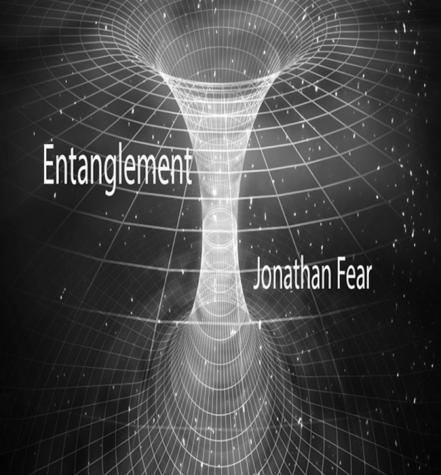
Imagine two black holes that are entangled to produce an Einstein-
Rosen bridge. Bob is stationed at one and Alice at the other. As long as Bob and
Alice stay outside their respective black hole event horizons, communication
between them can only take place through exterior space – a long trip which
cannot be short-circuited through the Einstein-Rosen bridge. Imagine that Alice
has a quantum computer that controls her black hole. She hopes to send
messages to Bob through the Einstein-Rosen bridge. However, Bob cannot
receive the messages if he is outside the event horizon on his side although as
soon as he passes through the event horizon he can. You might imagine that
under certain conditions Bob and Alice could jump into their respective black
holes and meet very soon after. However, Einstein-Rosen bridges are not
traversable. As Bob jumps into the black hole, it shrinks as he approaches the
singularity; the bridge closes, before he can get through. At the same instant,
time evolves and the bridge stretches. Its length grows so fast that no signal can
get through.
Although it may seem a very complex, peculiar and perhaps
counterintuitive object, a black hole can essentially be described by just three
quantities: its mass, its angular momentum and its electrical charge.
In 1974, Hawking showed that black holes thermally create and emit
sub-atomic particles (now called Hawking radiation) until they exhaust their
energy and evaporate completely. According to this theory, black holes are
neither completely black nor last forever. He showed how the strong
gravitational field around a black hole can affect the production of matching
pairs of particles and anti-particles. This happens all the time in ‘empty’ space
according to quantum theory. If the particles are created just outside the event
horizon of a black hole, then it is possible that an electron may escape –
observed as thermal radiation emitting from the black hole – while its
antimatter equivalent, a positron, may fall back into the black hole. This is the
mechanism through which a black hole gradually loses mass.
It was one of the first expressions of a theory which synthesised, at
least to some extent, quantum mechanics and general relativity.
However, a corollary of this is the so-called “Information Paradox” or
“Hawking Paradox”, whereby physical information (which roughly means the
distinct identity and properties of particles going into a black hole) appears to
be completely lost to the universe in contravention of the accepted laws of
physics (referred to as the "law of conservation of information").
Hawking vigorously defended this paradox for almost 30 years. In
2004, he overturned his long-held belief that any “information” crossing the
event horizon of a black hole is lost. He became convinced that black holes
would eventually transmit, albeit in a garbled format (as we perceive it)
information about all matter they had consumed. This is a complex area of
theory and even Hawking struggled to communicate it, stating at one point,
“The Euclidean path integral over all topologically trivial metrics can be done by time
slicing and so is unitary when analytically continued to the Lorentzian”.
It is theoretically possible to use such a concept as a tunnel or short-cut
for high-speed space travel between distant points. However, a generally
accepted property of wormholes is that they are inherently highly unstable and
would probably collapse in a much shorter time than it would take to get
through to the other side. Furthermore, even if it were possible to get a photon
or other matter into the Einstein-Rosen bridge it would necessarily hit the
singularity(s). A more massive object would have to travel faster than the speed
of light to get through. Nevertheless, the prospect of a practical application of
the theory remains a possibility.
An alternative proposed solution to the accepted view is almost
impossible to envisage or explain in an understandable way. Conformal
Symmetry theory suggests that, as an object falls into a black hole, a copy of the
information that makes it up is scrambled and distributed in two dimensions
around the edge of the black hole. Furthermore, it suggests that a similar
process occurs in the universe as a whole. This implies three-dimensional
‘reality’ is merely a holographic representation of alternate reality contained in
two dimensions around the edge of the universe.
Quantum Entanglement
Quantum entanglement is a physical phenomenon that occurs when
pairs or groups of particles are generated or interact in ways such that the
quantum state of each particle cannot be described independently of the
others. In quantum mechanics, ‘spin’ is an intrinsic form of angular momentum
carried by elementary particles, composite particles (hadrons) and atomic
nuclei. One notable feature of angular momentum is that it must be preserved –
it cannot be lost.
Entanglement means that if you observe the spin state of one of a pair
of particles, you know that of the other, even when the particles are separated
by a large distance. In other words, a quantum state is determined for the whole
system. Entanglement has been demonstrated experimentally in photons,
neutrinos, electrons, molecules and even small diamonds.
Imagine two observers, Bob and Alice, who might be neighbours, or on
different continents, even on different planets, observing a pair of particles, one
with Bob and the other with Alice.
‘People have been asking how the particle with Alice somehow knew the
proper spin state to be in, because presumably, before any measurement is made,
they both can randomly select one of two spin states to be in. Was there any signal
sent from Bob's particle to Alice's to tell it what spin state to be in? We have found no
such signal, and if there is, it has been shown that it will have to travel significantly
faster than c (the speed of light). No matter how far apart the two daughter particles
are, they somehow will know just what state to be in once one of them is measured.
This, boys and girls, is what we called quantum entanglement. The property
of the quantum particles that we call ‘spin’ is entangled between these two particles.
Once the value of the spin of one particle is determined, it automatically forces the
other particles to be in a corresponding state to preserve the conservation law.
But note that what is entangled is the property of the particle. It is the
information about the property (spin) that is undergoing the so-called ‘quantum
teleportation’. The particle itself did not get ‘teleported’ the way they ‘teleport’ things
in Star Trek movies/TV series. It is the property, in other words, the information, about
the object, that is entangled, not the entire object itself. So, in this example, the object
doesn't jump around all over the place.’
ZapperZ Wednesday, April 22, 2015
http://physicsandphysicists.blogspot.co.uk/2015/04/quantum-entanglement-for-
dummies.html Accessed 2021
Quantum Vacuum Drive
The Unruh radiation is a strange phenomenon: an accelerating observer
travelling through Minkowski space-time will observe a thermal spectrum of
particle excitations. In other words, the background appears to be warm when
viewed from an accelerating frame of reference. Minkowski space-time is a
combination of three-dimensional Euclidean space and time into a four-
dimensional manifold. A manifold is a topological space that is locally Euclidean.
For example, any spherical object, Earth for instance, that is nearly flat on a
small scale is a manifold.
Unruh demonstrated theoretically that the notion of vacuum depends
on the path of the observer through space-time. However, a ‘vacuum’ is not
‘empty space’, it is filled with the quantum fields that make up the universe. A
vacuum is simply the lowest possible energy state of these fields.
This phenomenon underpins the quantum vacuum thruster where
thrust is produced by the momentum transfer of microwaves in a waveguide
chamber of the drive. The cone shaped chamber allows Unruh radiation of a
certain size at the large end but only a smaller wavelength at the other end,
exerting an impact on photons.
Nevertheless, how could such a device work? According to Einstein’s
theory of special relativity, any object with rest mass gains relativistic mass as it
increases momentum. Yet, photons never come to rest and cannot be
considered to have resting mass and, without that, its mass cannot increase like
relativistic masses (which is why light travels so quickly). This forms the basis of
our ‘laws’ of physics that agree with experiments; photons have no relativistic
mass and therefore no inertial mass.
Bizarrely, however, photons do have momentum as demonstrated by
the Compton Scattering experiments. The scattering of a photon by a charged
particle (or microwave) results in a decrease in energy (increase in wavelength)
of the photon. It is this change in momentum and the requirement to maintain
overall momentum in the system that provides the energy to power the
thruster. Even more oddly, if the shape of the chamber is reversed, the thrust
itself can be reversed.
Speeds in excess of 600,000 mph are theoretically possible from an
engine that apparently has no fuel.
The Multiverse
The multiverse is a theory in which our universe is not the only one,
rather many universes exist in parallel to each other. There is a range of
constructs to describe the multiverse from level one to four. Consider a level
one parallel universe. In such a model, space is so vast the rules of probability
inevitably dictate other planets exactly like Earth will exist (in fact an infinite
number). This construct relies on two assumptions:
The universe is infinite.
Within an infinite universe, every single possible configuration of
particles we know of in the Hubble volume takes place multiple
times.
However, if such parallel universes do exist, reaching one would be
impossible. Out with the Hubble volume, no information could ever be
exchanged as it is beyond the speed of light, the absolute limitation of
information transfer within the Hubble volume. Unless of course, you could
transcend space time.
Ship of Theseus
The ship of Theseus, also known as Theseus's paradox, is a thought
experiment that raises the question of whether an object having had its
components replaced remains fundamentally the same object. The paradox was
most notably considered by Plutarch in the late first century.
‘The ship wherein Theseus and the youth of Athens returned from Crete had
thirty oars, and was preserved by the Athenians down even to the time of Demetrius
Phalereus, for they took away the old planks as they decayed, putting in new and
stronger timber in their places, in so much that this ship became a standing example
among the philosophers, for the logical question of things that grow; one side holding
that the ship remained the same, and the other contending that it was not the same.’
Plutarch, Life of Theseus
Plutarch questioned whether the ship would remain the same if it were
entirely replaced, piece by piece.
Centuries later, the philosopher Thomas Hobbes (1588-1679)
introduced a further element to the conundrum; what would happen if the
original planks were gathered up after they were replaced and used to build a
second ship. He asked, ‘Which ship, if either, would be the original ship of
Theseus?’
The Platonic Solids
The ancient Greeks studied the Platonic solids extensively. Sources
credit Pythagoras with their discovery. Other evidence suggests that he may
have only been familiar with the tetrahedron, cube and icosahedron and that
the discovery of the octahedron and dodecahedron belong to Theaetetus, a
Greek mathematician and contemporary of Plato. Theaetetus gave a
mathematical description of all five platonic solids and may have been
responsible for the first known proof that no other convex regular polyhedra
exist.
The Platonic solids are prominent in the philosophy of Plato. He wrote about
them in the dialogue Timaeus, a long monologue given by Timaeus of Locri,
written about 360 BCE, in which he associated each of the four classical
elements (earth, air, water and fire) with a regular solid. Earth was associated
with the cube, air with the octahedron, water with the icosahedron and fire
with the tetrahedron. Of the fifth Platonic solid, the dodecahedron, Plato
obscurely remarked, ‘The gods used it for arranging the constellations on the
whole heaven.’